
Celebrating Every Path to Parenthood: Maternity Photography for LGBTQ+ Families
Why Representation Matters in Maternity Photography
When I see a maternity photograph, I should see celebration. Strength. A moment in someone's life that deserves to be honored.
I shouldn't see the photographer's assumptions about gender, sexuality, or family structure.
But that happens a lot. Stock maternity photography defaults to cisgender straight couples. Standard language assumes "mother" and "father." Wardrobe and styling options sometimes don't account for different bodies, styles, gender presentations.
If you're LGBTQ+ and pregnant (or your partner is), you deserve a maternity photographer who doesn't require translation. Who doesn't start from assumptions. Who sees your family structure as the structure—not a variation on a template.
Let me be clear about what I mean.
Who Books Maternity Photography: The Diversity of Paths to Parenthood
Here's who I've photographed:
Two women, one pregnant, partners for eight years
A trans man in his first pregnancy, with his non-binary partner
A single parent by choice
Two men through surrogacy, with the surrogate in maternity portraits
A non-binary person in their pregnancy
A woman in her second marriage, pregnant with her partner's biological child
A woman raising a child with her ex and his new partner (cooperative co-parenting)
These aren't edge cases or special situations. These are normal ways that families happen. They deserve photography that honors them as normal—as just families.
Language Matters: What to Look for in a Photographer
When you're researching a maternity photographer, pay attention to language:
Does the photographer use gendered language? Listen for assumptions. "Mothers" instead of "pregnant people" or "expecting parents." "Father's perspective." "Husband and wife." These small word choices reveal whether a photographer thinks beyond the heterosexual default.
Do they use inclusive pronouns? If someone is clearly trying to be inclusive but getting pronouns wrong, it shows they're willing to learn. If a photographer's website is entirely gendered and doesn't acknowledge that LGBTQ+ clients exist, that's information too.
What does their portfolio actually show? Are there visibly queer couples? Different body types, race, family structures? Not to check a box, but to show that they've actually photographed diverse families—and those families were important enough to share publicly.
How do they respond to questions? If you email asking about photographing two moms or a trans parent, does the photographer answer confidently and warmly? Or do they fumble? Do they ask what you're comfortable with, or do they impose their own ideas about what your session should look like?
A photographer who knows how to work with LGBTQ+ families will make this obvious from the first conversation.
Different Family Structures, Different Shoots
The diversity of family structures means sessions look different depending on who's involved.


Two-Mom Sessions
For a two-mom family, the question is sometimes: whose belly gets photographed? Both? One pregnancy, one supporting? And what's the emotional story you want to tell?
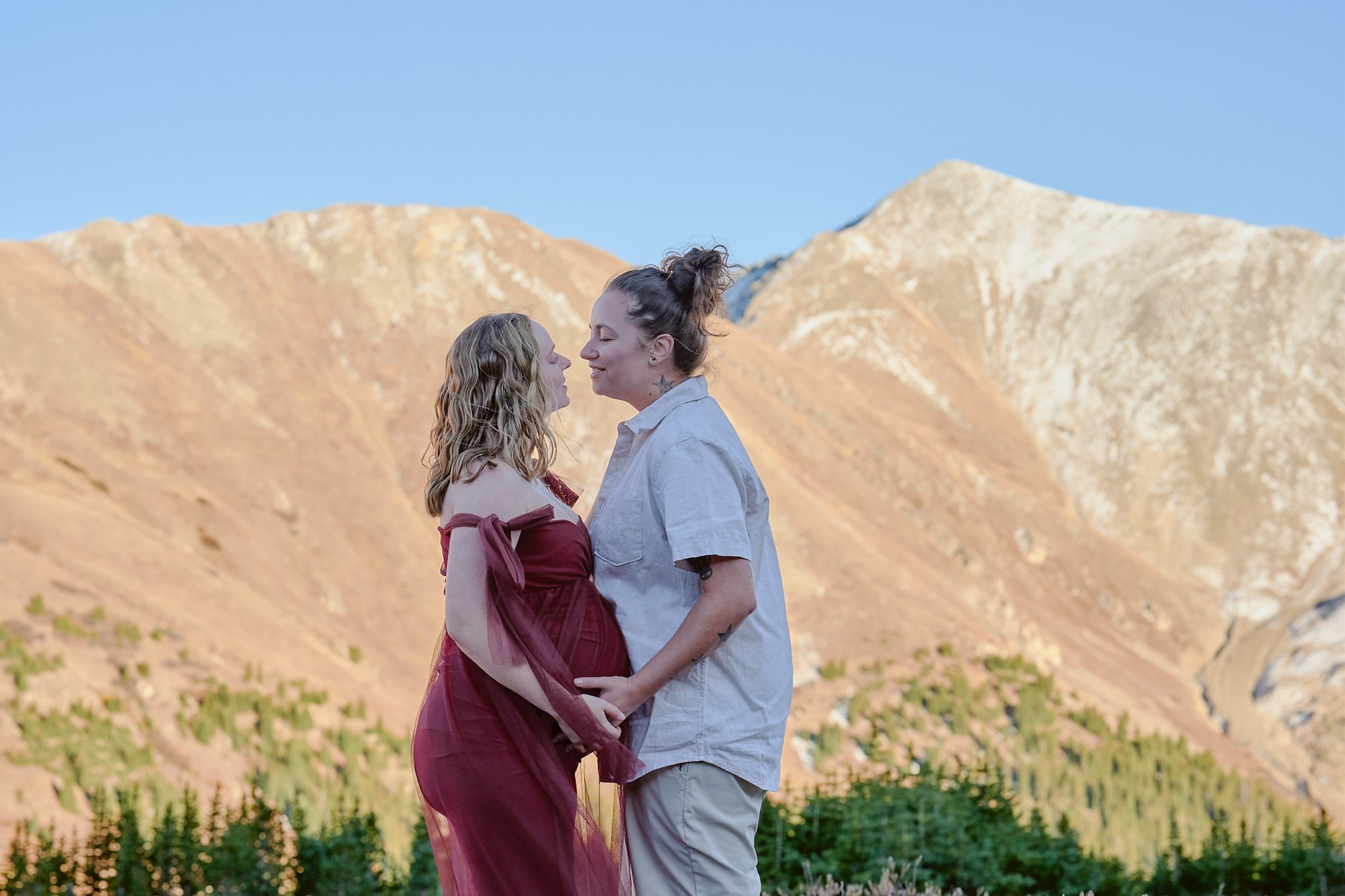
I've photographed sessions where one partner was pregnant and the other was powerfully present—hands on the belly, standing together, equal roles even though one person is physically pregnant. I've also photographed sessions where the non-pregnant partner stepped back, letting the pregnant partner be the sole focus.
What matters is that it's your choice. Not assumptions about roles or presentation, but what feels right for your family.
Trans and Non-Binary Pregnancies
A trans man or non-binary person carrying a pregnancy is navigating something complex. Pregnancy has been gendered and feminized in culture. If you're a trans man or non-binary parent, you might want maternity photos that affirm your identity, not erase it.
That might mean:
Wardrobe that matches your gender presentation, not stereotypical pregnancy wear
Language that uses your correct pronouns and terms
A photographer who doesn't accidentally misgender you in conversation or in how they frame the session
Comfort with discussing what representation matters to you
I ask questions. "How do you want to be referred to in conversation about these photos?" "What style feels like you?" "Does your gender identity play into how you want to be photographed?"
I ask because I'm not an expert in your identity—you are.
Single Parent by Choice
Many single people choose pregnancy intentionally. Through IVF, adoption, co-parenting arrangements, or other paths, they're building families solo.
Maternity photos for a single parent often feel different. Sometimes there's profound solitude and strength in solo portraits. Sometimes the child is already in the picture (through adoption or co-parenting) and they're part of the photos. Sometimes the partner came later, and you want to honor both the solo journey and the partnership that grew from it.
The session should reflect your actual family structure, not a template.
Language and Assumptions: The Specific Things to Avoid
If you're booking with any photographer and you're LGBTQ+, here's what should never happen:
Misgendering: If you've stated your pronouns and the photographer uses wrong ones, correct them. They should correct themselves without making it weird. If they get defensive, that's a signal.
Assumptions about roles: Don't let a photographer assume who's wearing what, who does what, who's "playing" what role. You tell them your family.
Unnecessary explanations: You shouldn't have to explain your family structure in detail. A simple intro ("I'm pregnant and my partner is X") should be enough. If a photographer asks probing questions beyond that, they're being nosy.
"I've never done this before" as an excuse: If this is your photographer's first time working with an LGBTQ+ client, they can be honest about that. But they shouldn't make that your problem. They should be willing to learn.
Fetishizing or exoticizing: Some photographers treat LGBTQ+ clients as novelty. That's not allyship; that's patronizing. You should feel like a valued client, not a special project.
Representation and Legacy
Here's why this matters beyond the immediate session: your child will see these photos.
If your child grows up seeing maternity photos that celebrate their family as it actually is—two moms, a trans parent, a single parent, whatever the structure—they grow up knowing their origin story was honored and beautiful.
If the photos pretend to be something else, or minimize your family structure, there's a message in that too. Not a good one.
Representation in maternity photography shouldn't be radical or special. It should just be normal. Your family should look at these photos and see themselves—not a version of themselves, but the real thing.
What I Bring to LGBTQ+ Maternity Sessions
I ask questions. I listen more than I assume. I've photographed enough diverse families that I'm not surprised or uncertain—I'm genuinely interested in how your specific family works and what matters to you.
I use language carefully and I correct myself without drama if I make a mistake. I don't pretend to understand your experience (I don't), but I'm genuinely respectful of it.
Most importantly: I see your family structure as the baseline, not a variation. When you walk into a session with me, I'm not photographing an alternative family structure. I'm photographing your family, exactly as it is.
If you're LGBTQ+ and pregnant or expecting, you deserve maternity photography that celebrates your actual family. Not despite your structure, but because of it. That's what we do.