
What to Do with Your Maternity Photos After the Session: Prints, Albums, and Why Digital Isn’t Enough
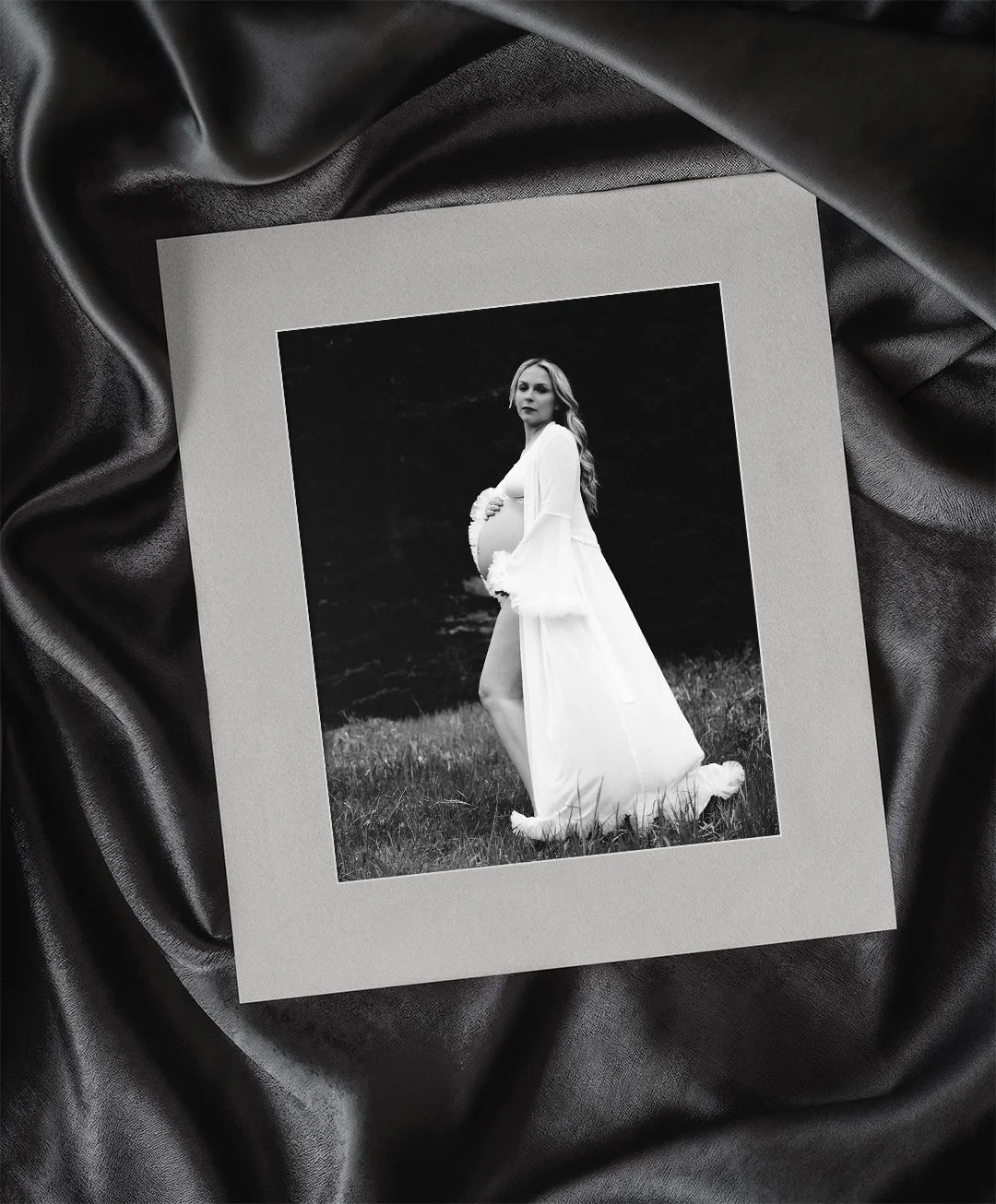
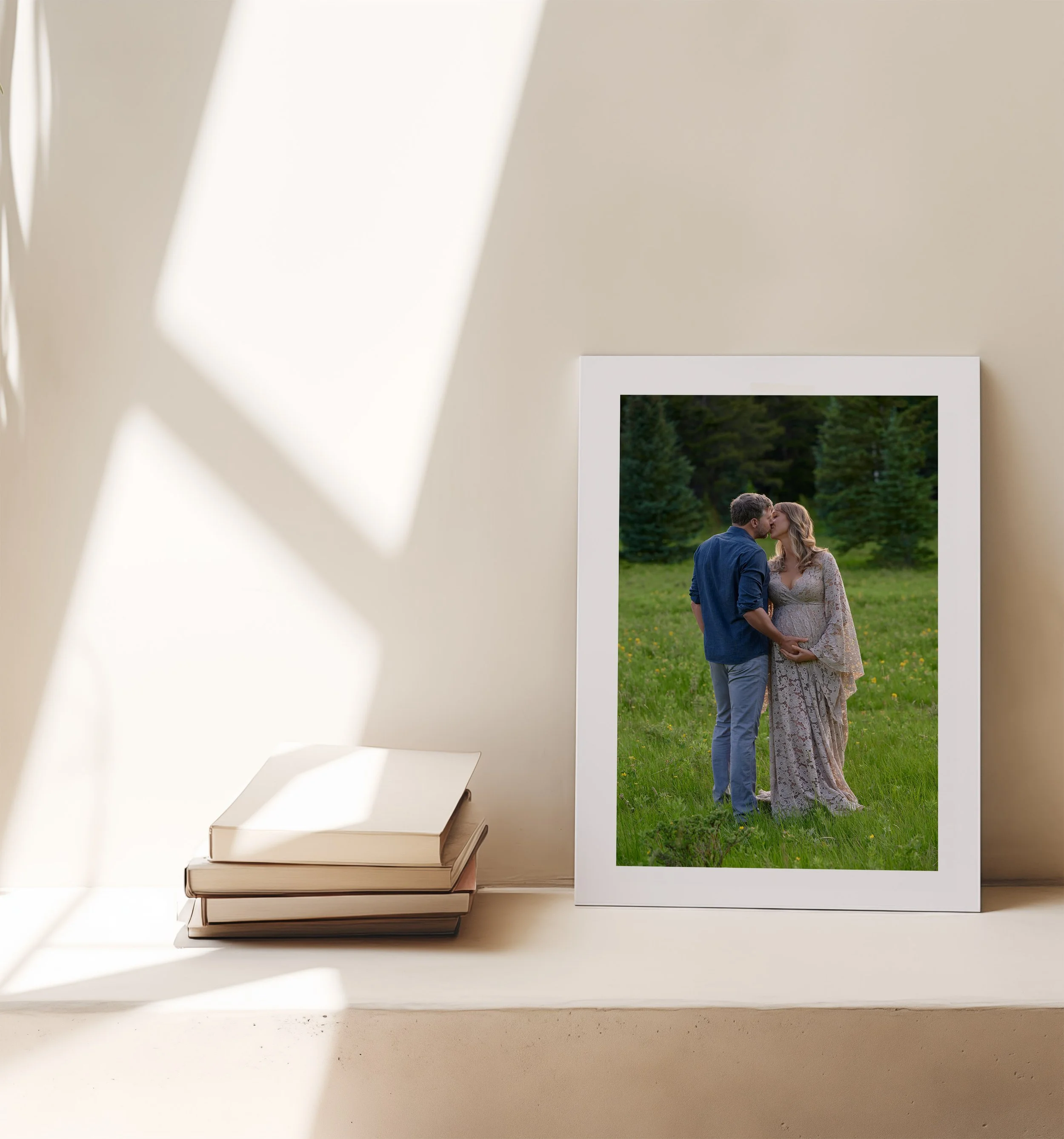
You've invested in a maternity session. You've chosen a photographer, invested in the time, chosen your styling, shown up during the right window of pregnancy. And now you have the files.
Here's where most people stop. They download the images, put them on their phone, maybe post a few on Instagram, and then don't look at them again until they're cleaning out old phones in five years.
That's a missed opportunity. And honestly, it means you're not getting the full value from your session.
Let me explain why prints and physical products matter, and what I'd recommend actually doing with your maternity photographs.

The Case for Printing vs. Keeping Files on Your Phone
There's something about holding a printed photograph that's fundamentally different from looking at it on a screen. The texture of the paper. The weight. The permanence. A print demands your attention in a way that scrolling through your phone doesn't. You have a limited amount of time at my Denver Studio, prints make it last a lifetime!
More importantly, a print lasts. Your phone will become obsolete. Your cloud storage might get lost or deleted. Your hard drive might crash. A well-printed photograph on quality paper, properly stored, will last 50+ years. Your daughter might hold that print someday and actually get to see her mother at this moment in time.
Digital files are ephemeral. Prints are permanent.
That's not a small distinction.
Album Options and What Works Best
Flush-mount albums are my top recommendation for maternity sessions. The images are printed edge-to-edge across the spread, creating a seamless, coffee-table-quality aesthetic. You can flip through the album and experience the sequence of images without interruption. Prices typically start around $300 for a 20-page album and go up from there depending on size and customization.
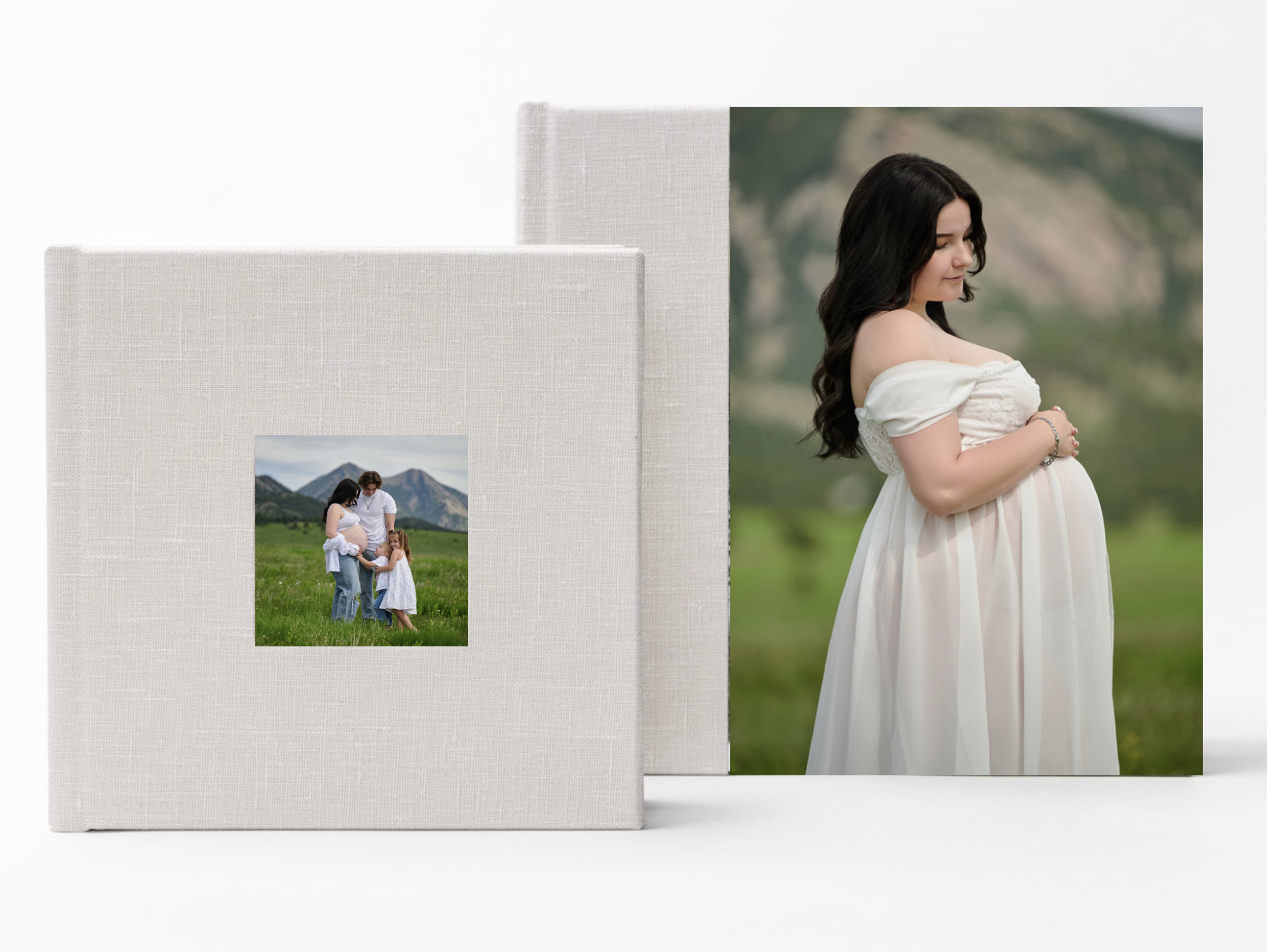
Lay-flat albums open completely flat (useful if you're planning to display them on a table) and have a similar feel to flush-mount. Slightly less sleek but equally heirloom-quality.
Photo books (like Artifact Uprising or other premium services) are a lighter option—less expensive (typically $100-200), but they feel less permanent and heirloom-like than a true flush-mount album. Good for gifting or if you want multiple versions to give to family.
Canvas prints and wall art are the other physical product category worth considering. A large canvas print (typically 24x36 inches or larger) becomes part of your home environment. You look at it daily. It documents the pregnancy in a way that's integrated into your life, not stored away.
Choosing Which Images to Print
Here's something I help clients with: you don't have to print all 50-100 edited images. In fact, you shouldn't. Too much choice becomes paralyzing, and you end up with 30 mediocre prints instead of 10 exceptional ones.
My recommendation: select 15-20 images for your primary album. These are the images that tell the story of the session most powerfully. They might include tight portraits, full-body poses, environmental shots, detail shots, and images of your partner or family if they were part of the session.
Secondary images (additional portraits, variations on poses, close-ups) can be printed as individual prints (8x10 or 5x7) or included in a separate, smaller album. But the primary album is the hero product. It's the thing you actually finish and display.
The Legacy Angle: Your Daughter Will Want These
I say this knowing I don't have kids: but I've photographed women showing me their mother's maternity portraits, or asking if I can locate maternity photos of themselves when they were pregnant. The prints matter. The images matter. The physical documentation of that moment matters.
Your daughter is going to be curious about this time in your life. When you were pregnant with her. How your body changed. How you felt. What you looked like at that vulnerable, powerful moment. A maternity portrait—a real one, printed and kept—is a way of saying to her: "I was here. I was ready. I wanted you to know that this mattered."
That's not sentimental. That's honest. And it's why physical prints outlast digital files.
Displaying Maternity Portraits in Your Home
Some people feel awkward displaying maternity portraits prominently. I'd gently push back on that. These are images of you during one of the most powerful seasons of your life. They deserve to be seen—not hidden in an album and stored in a closet.
Consider these options:
A large canvas print (24x36 or larger) in your bedroom or a living space
An album on your coffee table (heirloom quality, means you flip through it regularly)
A gallery wall featuring maternity portraits alongside other meaningful images
A smaller print in your child's bedroom or nursery
The placement matters less than the visibility. You want to see these images. You want to remember this time. You want your children to see images of their mother at this moment.
Practical Next Steps
After your session, you'll receive digital files (color-corrected, retouched, professional quality). Before you do anything else with them, decide: do you want to print? If yes, do you want an album, individual prints, canvas, or a combination?
I typically help clients navigate these decisions with mockups and recommendations based on what works best for the specific images from the session. Some sessions are perfect for a large landscape album. Others work better as a series of vertical prints in a gallery wall format.
Once your session is finished, let's talk about which format makes the most sense for your images and your home. The session is beautiful, but the print is forever.