
Why I Still Shoot Film for Maternity Portraits (And What Makes It Different)
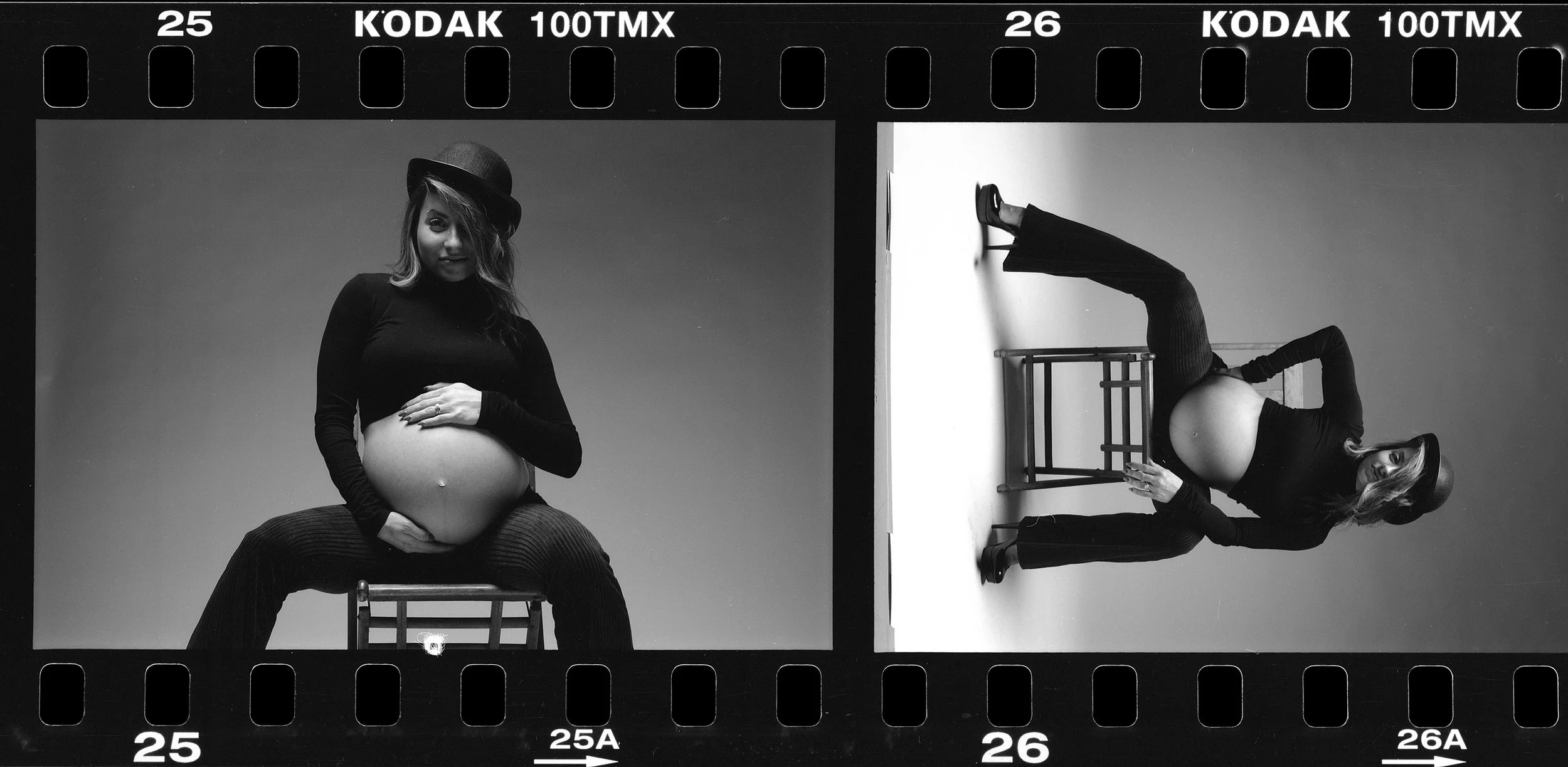
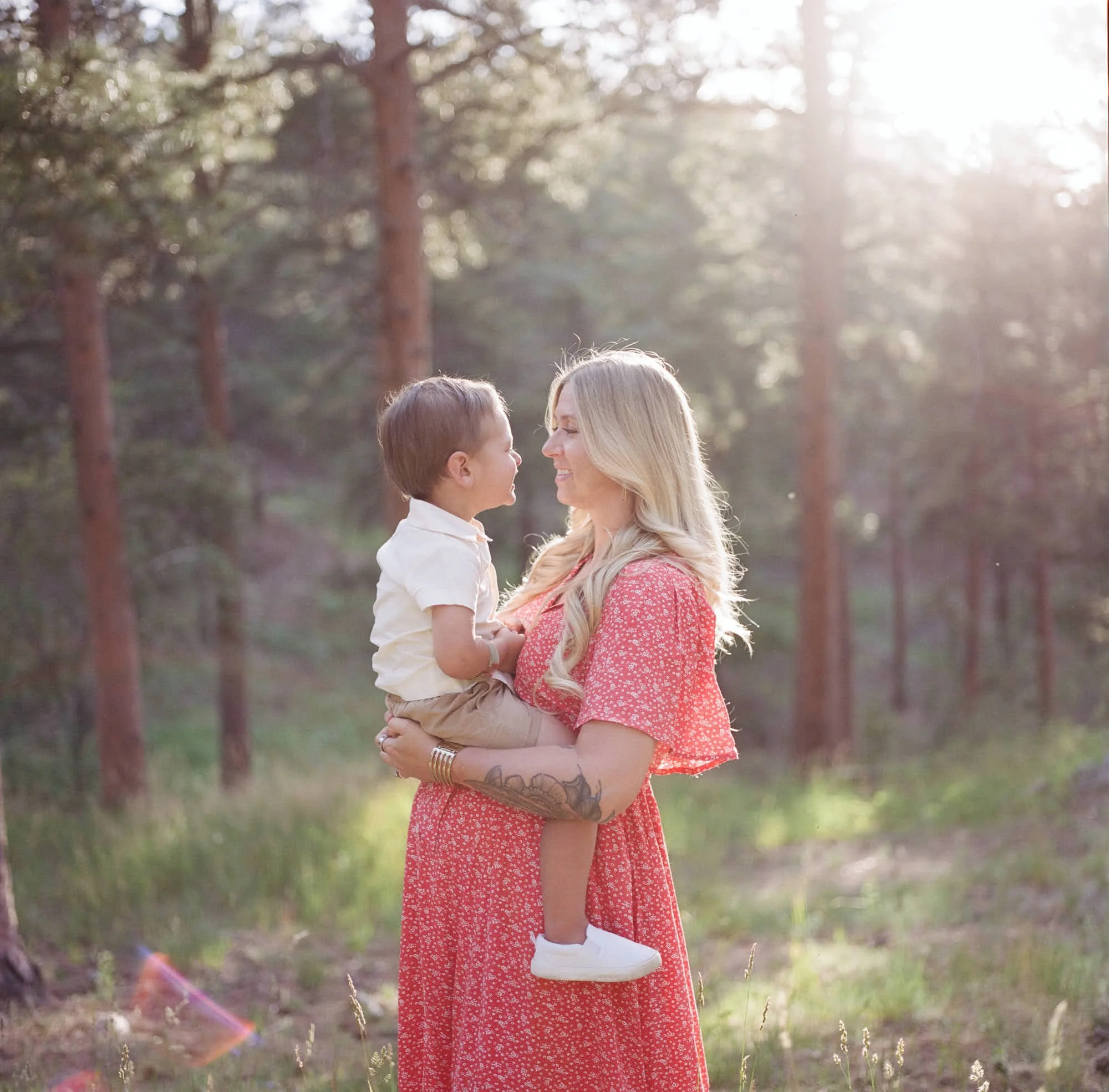
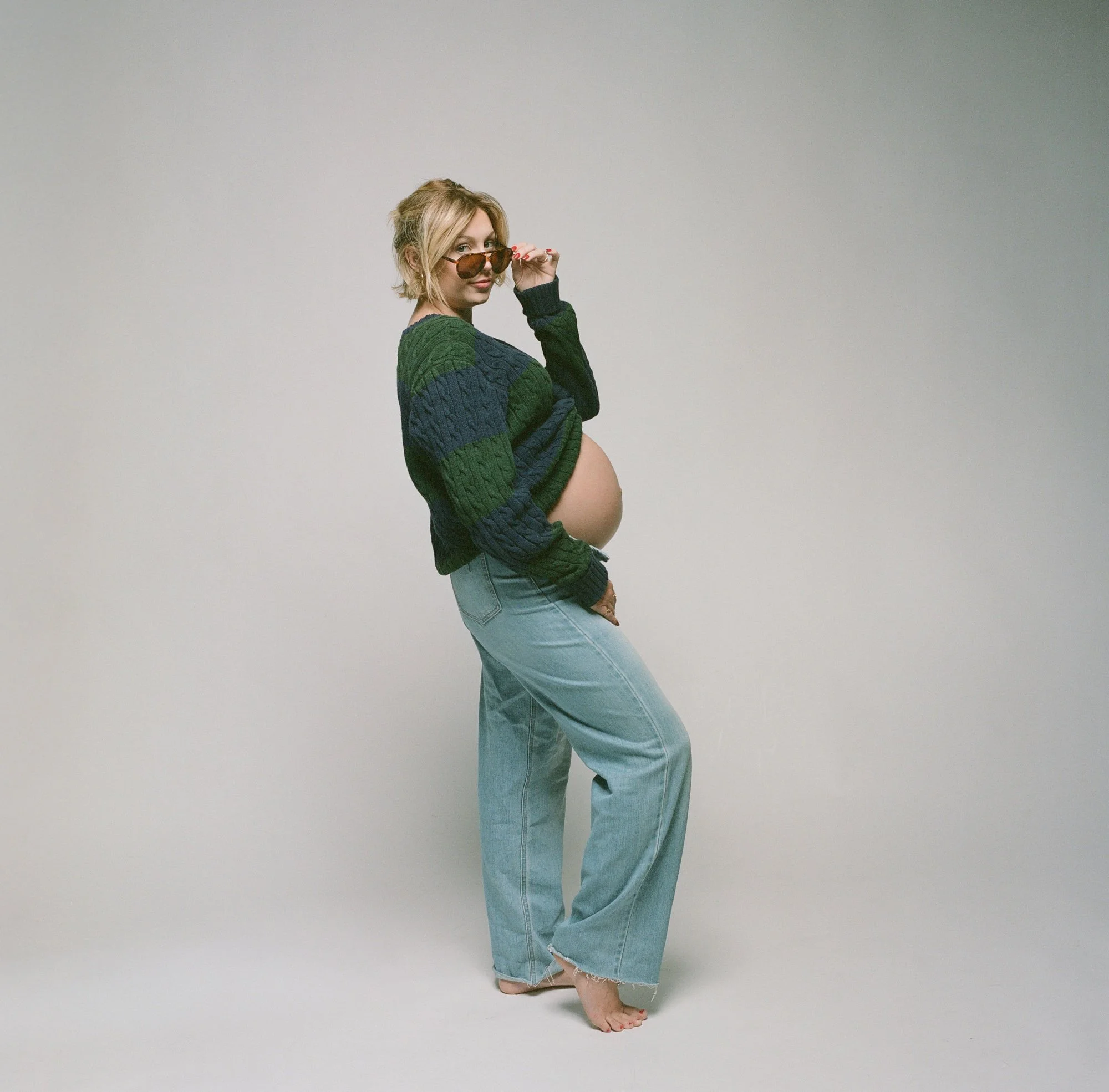
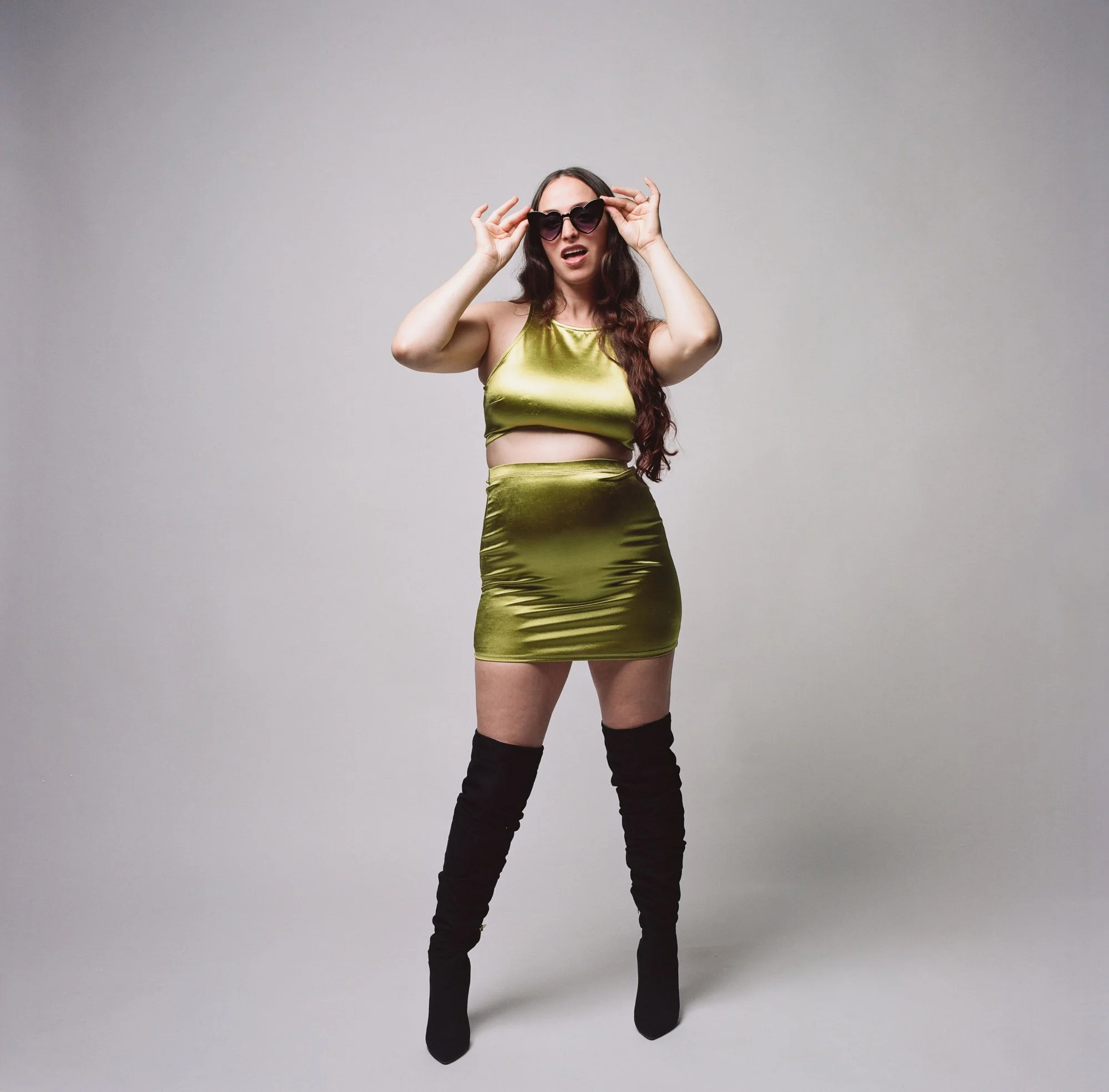
Christiana wanted to channel her inner dancer for her film maternity shoot…and it’s still one of my favorites ever.
In a world where every portrait photographer claims to be "client-focused" and shoots exclusively on digital capture, I'm still walking into sessions with a Hasselblad 503CW loaded with Portra 400. Not because it's trendy. Not because it makes for better Instagram content. But because after seven years and 500+ maternity portraits, I've discovered that film is the most honest way to photograph pregnancy.
Let me explain what this actually means and why it matters more than you might think.
What Shooting Film on a Hasselblad Really Means
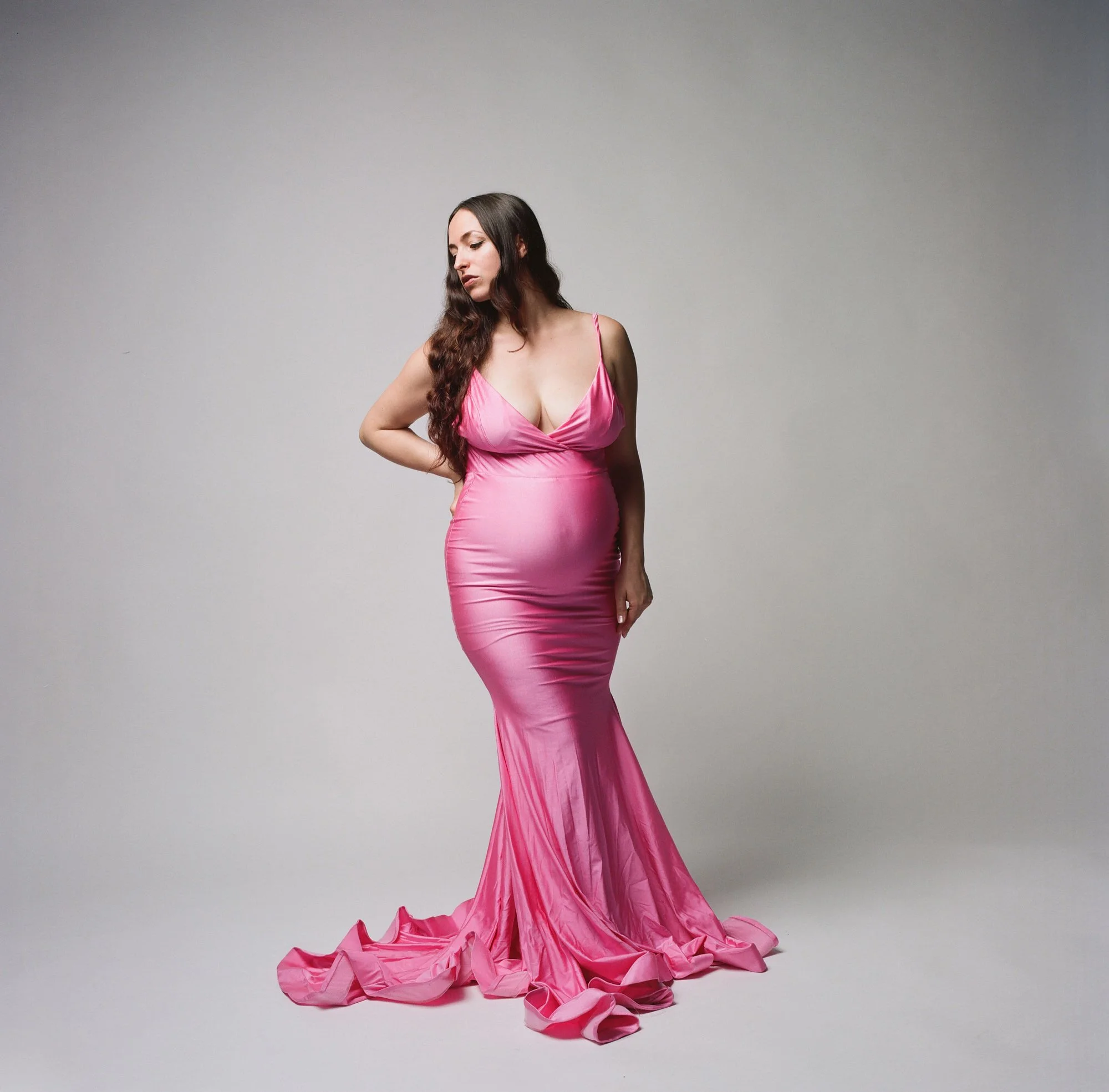
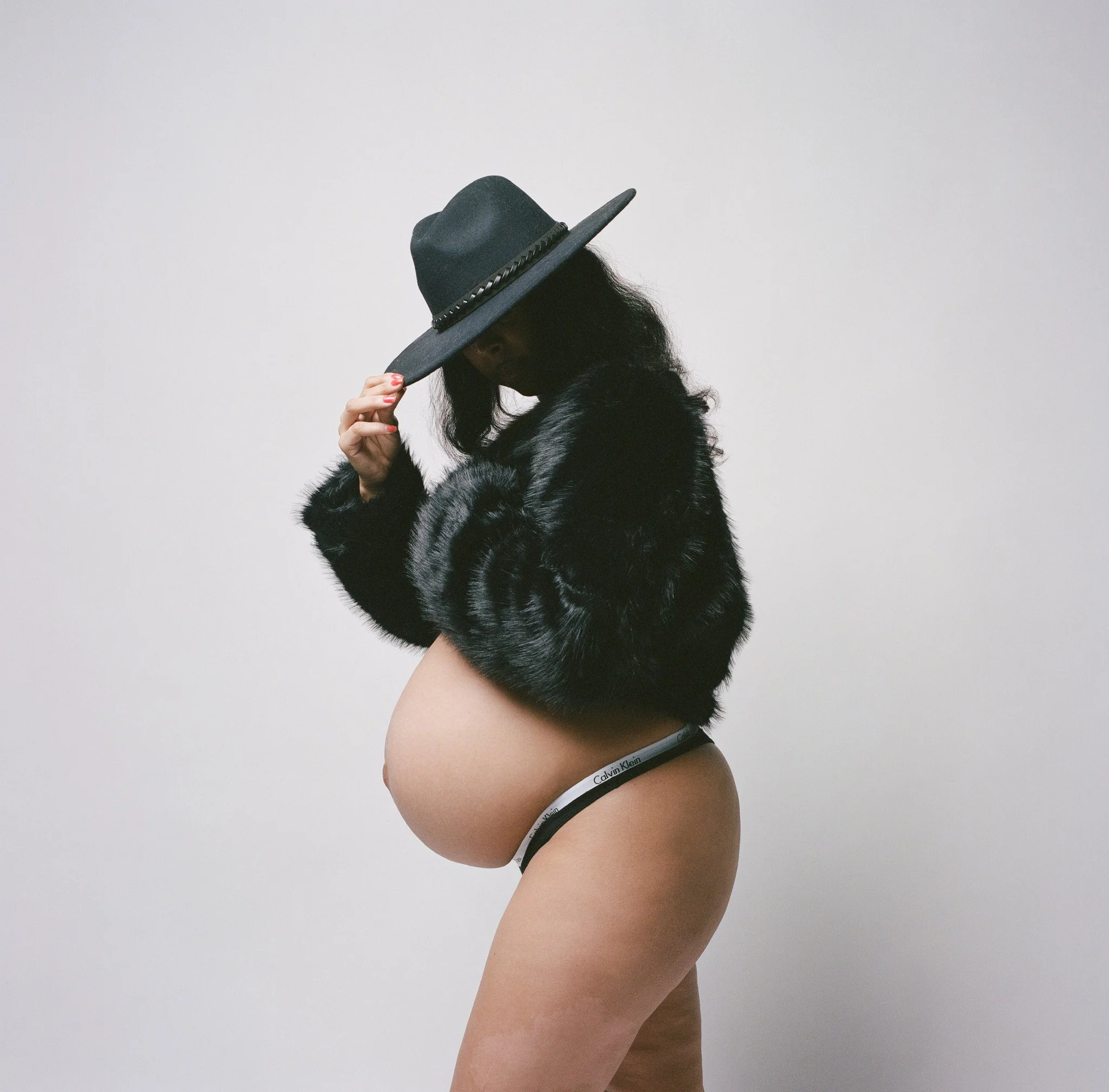
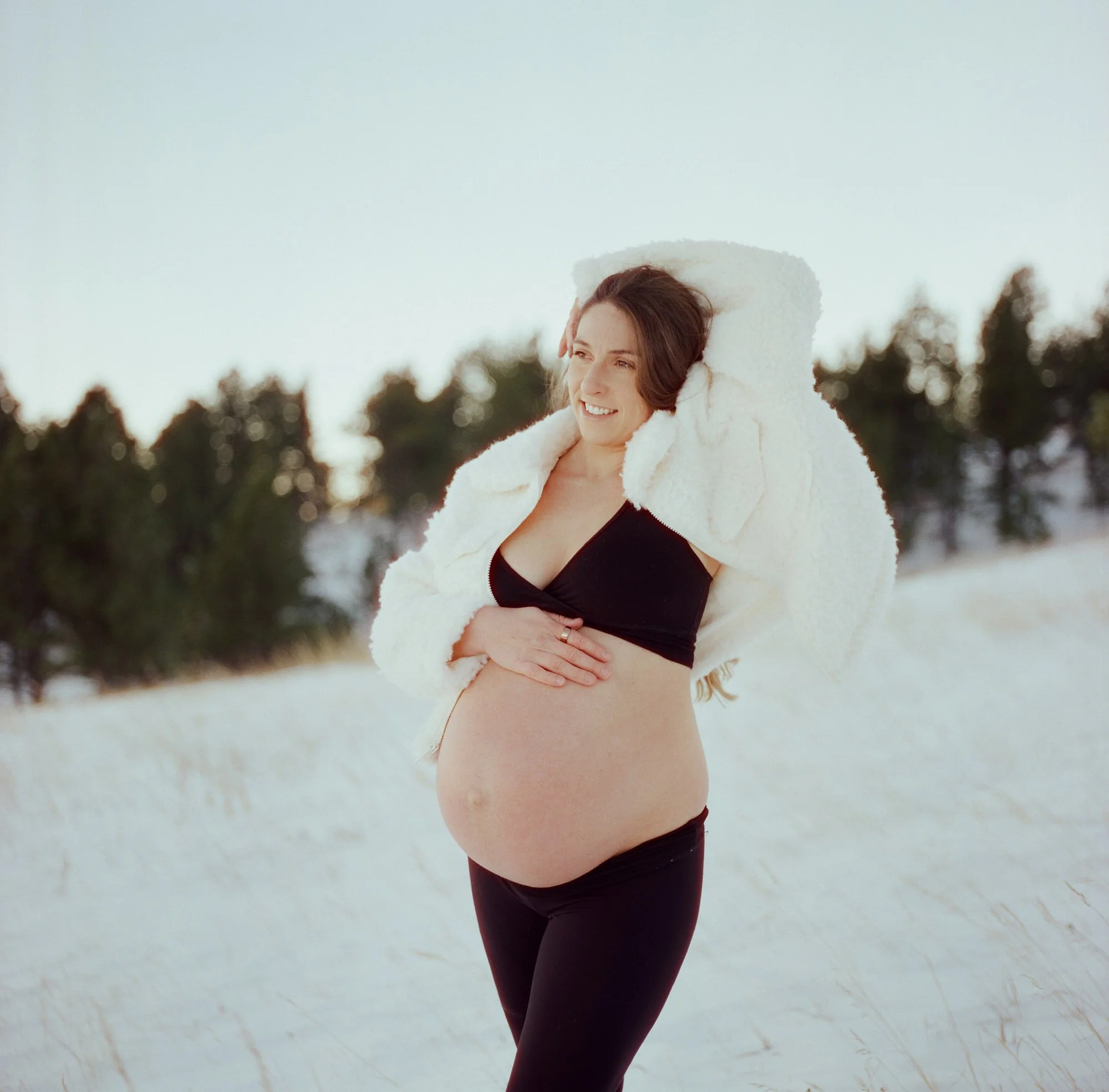
The Hasselblad 503CW is a medium format film camera. That specification alone changes everything about how I work. Medium format produces negatives larger than 35mm, which translates to images with more information, finer detail, and a three-dimensional quality that digital sensors struggle to replicate. When you enlarge a maternity portrait to hang on your wall, that difference becomes visceral.
But here's what people don't talk about: a Hasselblad has no screen on the back. There's no reviewing images in real-time. No chimping. No second-guessing. Every single frame I take requires intention. I meter the light. I compose. I execute. And then I move forward.
This constraint is actually a strength. It forces me into a deliberate creative process that I've noticed makes a visible difference in the final images.
Why Intentionality Changes Everything
Digital photography, for all its advantages, can create a kind of creative complacency. When you can take 300 images in a two-hour session and figure out which ones worked on the back end, there's less pressure to get it right in the moment. I've seen countless portraits that are technically competent but emotionally flat—the product of quantity over precision.
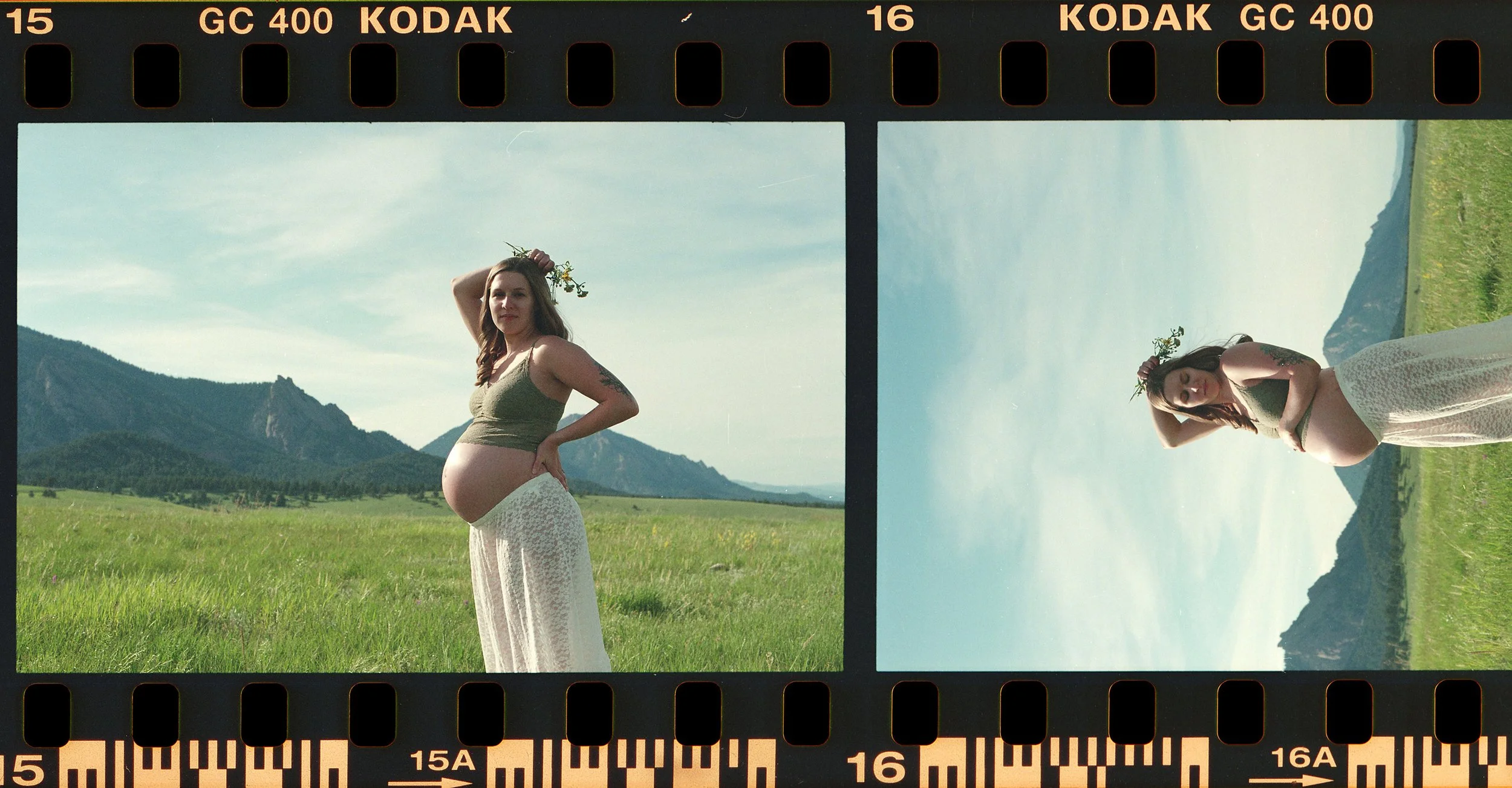
Film doesn't allow for that. I load a roll with 12 frames. That's 12 opportunities to capture the essence of a woman at this transformative moment in her life. I can't spray and pray. Every frame has to matter.
The result? My maternity sessions have a different energy. You're not hearing a constant shutter. There's breathing room. There's conversation. There's a photographer who's deeply present because the technical demands require it.
The Texture and Quality of Medium Format Film
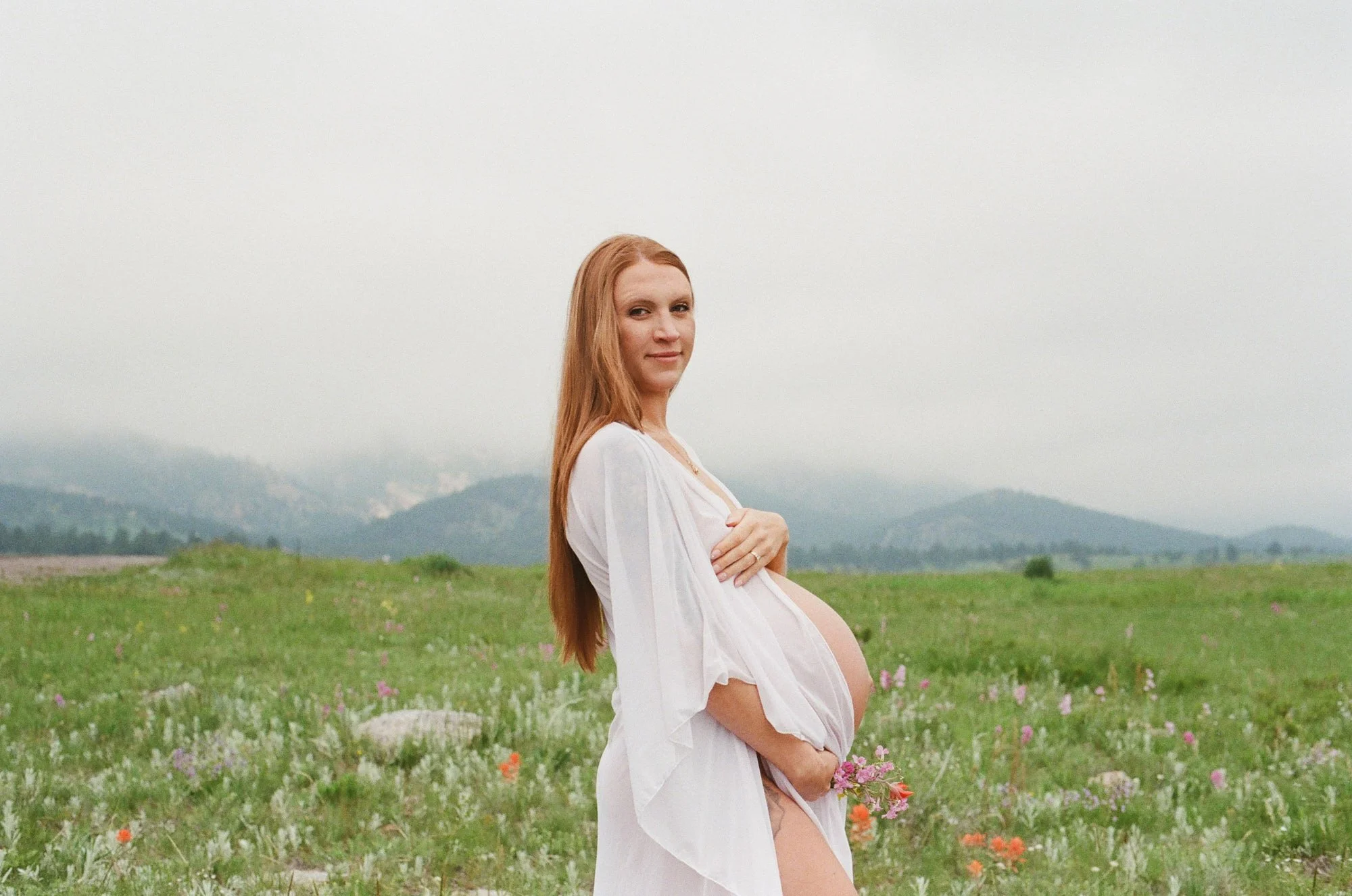
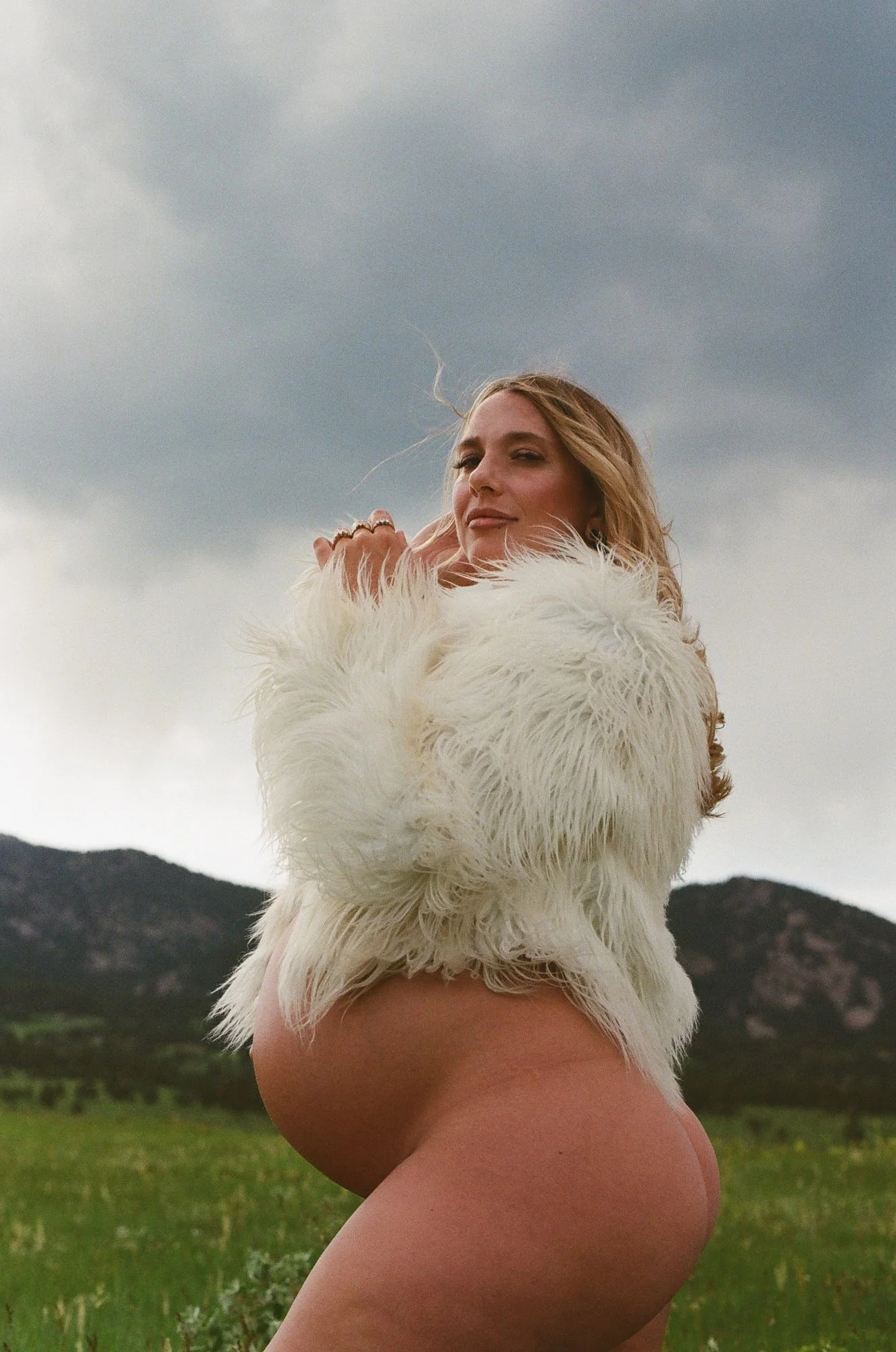
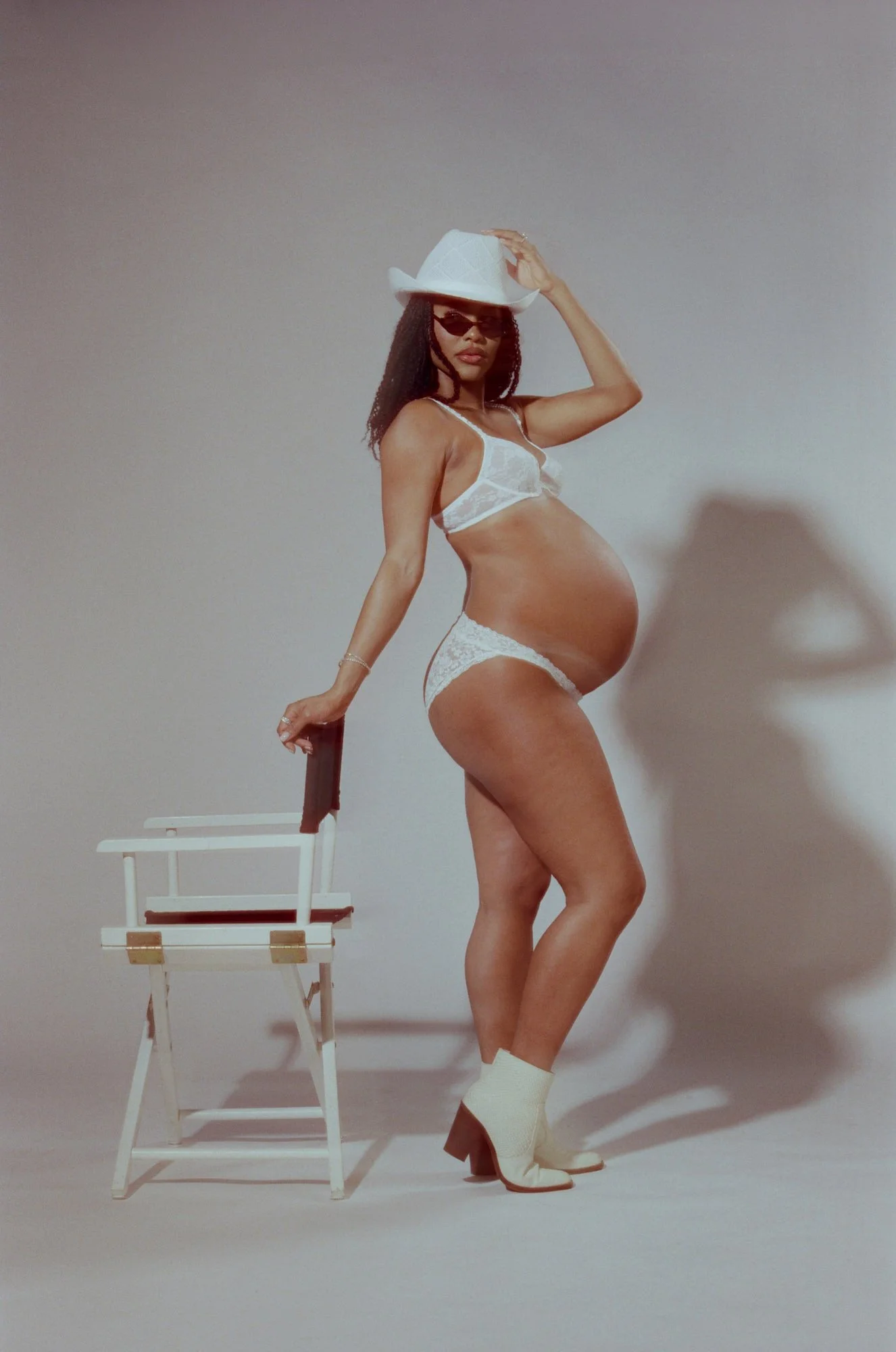
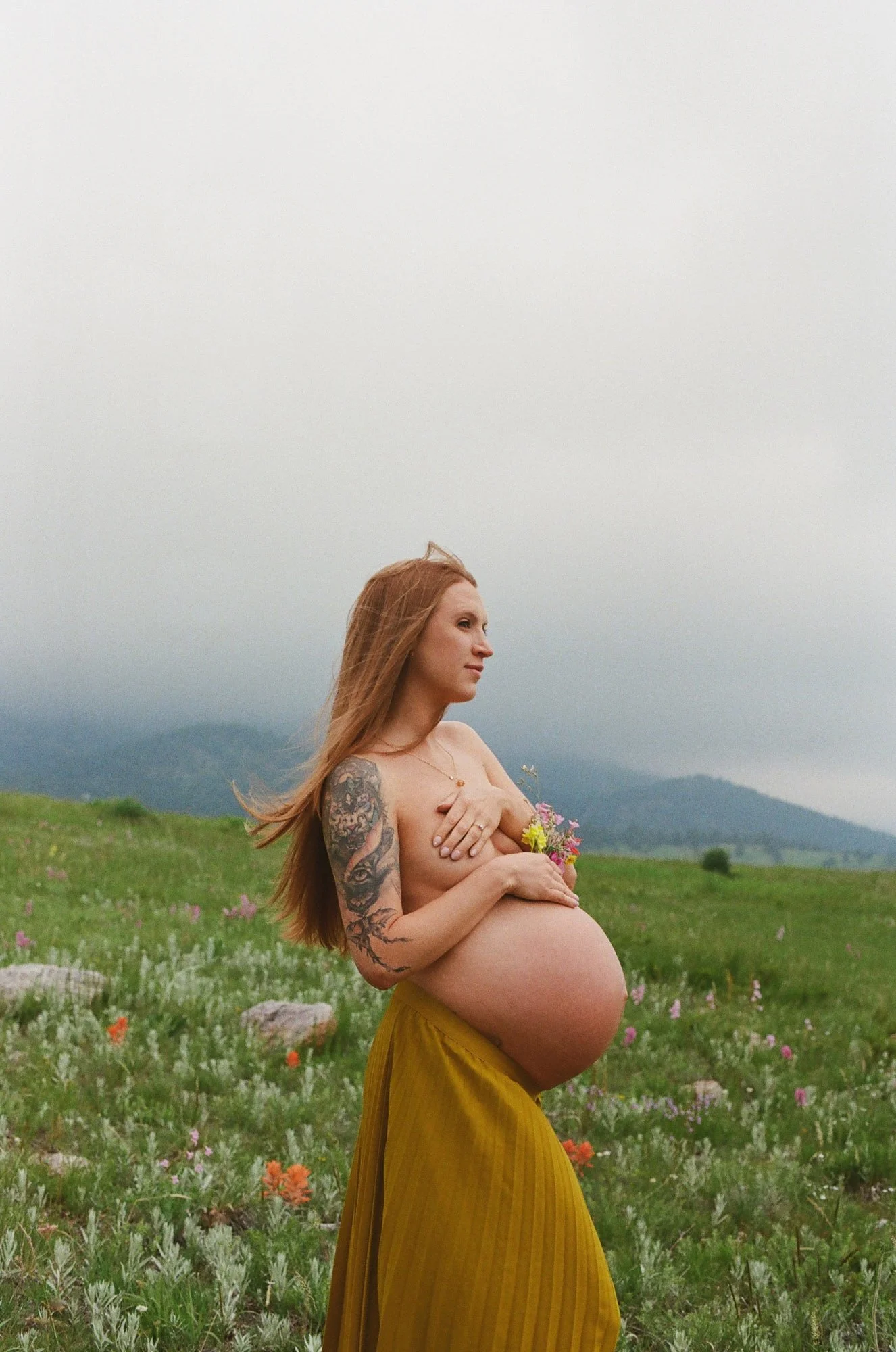
Here's the technical reality: Portra 400 film, when scanned and printed properly, produces a tonal range and color palette that digital sensors are still trying to match. The grain structure is organic. The color rendering is based on actual chemistry, not algorithms. When light hits a pregnant person's belly, the way that medium format film translates those curves and shadows creates a dimensionality that reads differently in a physical print.
This matters when you're looking at a 16x20 canvas in your living room. It matters when that image is going to last longer than most of your furniture.
Why Clients Specifically Request Film
I've noticed something over the years: certain clients immediately gravitate toward film sessions, even before they understand why. Often, they're women who are tuned into quality. They might appreciate fine art, design, craftsmanship. They understand that something made intentionally, with analog tools, carries a different kind of weight.
Some clients come to me saying they've seen my film work on Instagram and want it specifically. They recognize something they can't quite name—a clarity, a presence, a realness—and they're drawn to it.
Other clients are surprised when I show them the difference in person. One 16x20 film print next to a digital print of the same subject tells the story better than any explanation ever could.
How Film Has Shaped My Entire Approach
Here's something most photographers won't admit: even when I'm shooting digital, seven years of film work has shaped how I think about light, composition, and restraint. I still meter carefully. I still compose intentionally. I still prefer one perfect image to dozens of adequate ones.
That discipline carries over. My digital work doesn't look like someone who defaulted to digital once they got frustrated with film's limitations. It looks like someone who understands what film demanded and now applies those lessons regardless of the camera in my hands.
The Unretouched Nature of Film
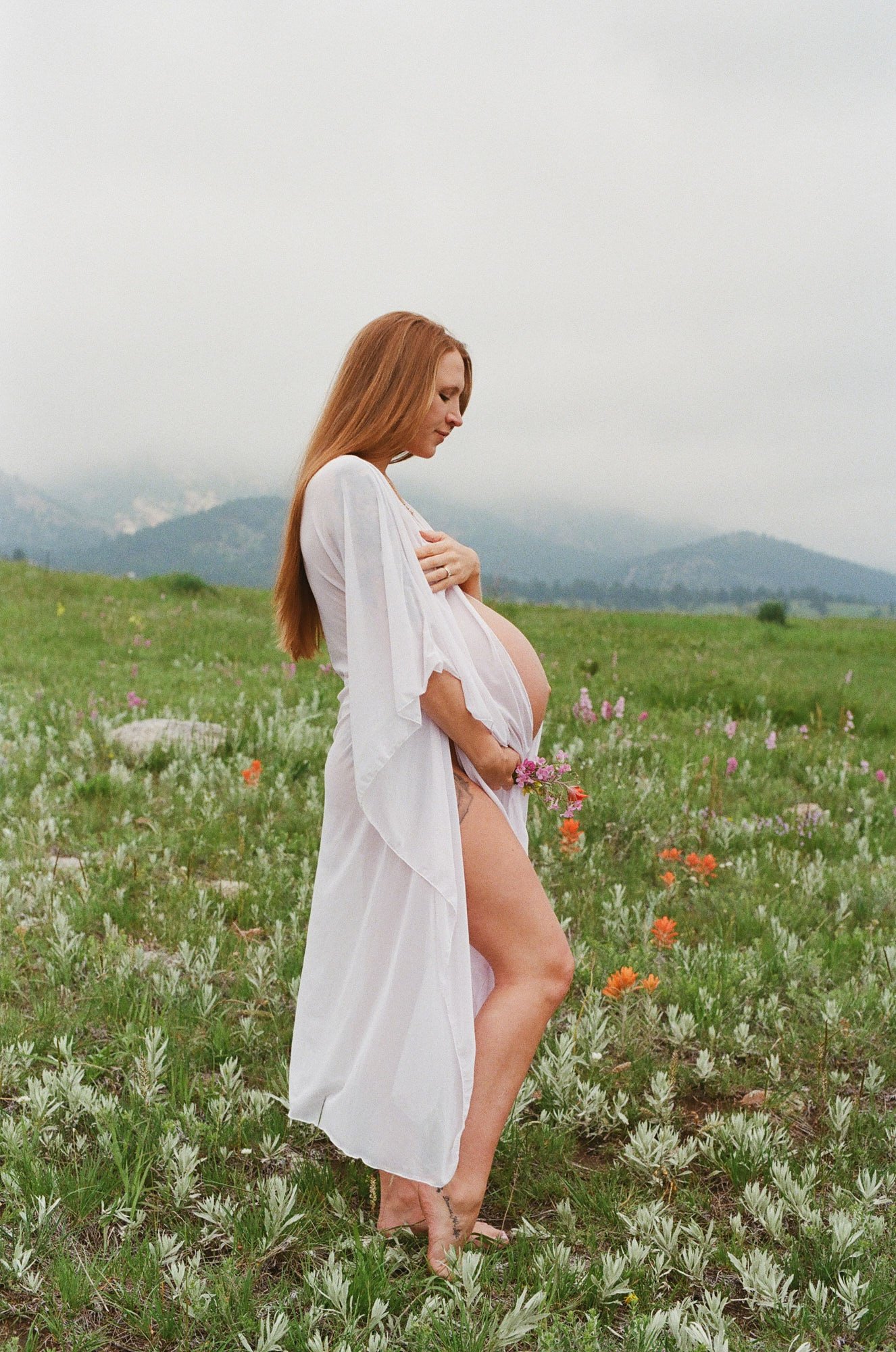
Film forces honesty in another way: you can't manipulate your way out of a bad edit. My negatives are scanned, and then they're printed. There's no heavy retouching. No dramatically altering skin tone with algorithms. No removing texture that's actually part of the image. The pregnancy is there—your skin, your curves, your radiance, exactly as they were in that moment.
Some clients find that vulnerability refreshing. Others appreciate that the image they're framing isn't an airbrushed fantasy, but a genuine reflection of who they were during this season.



Why This Matters More Than You Think
In an industry where maternity photography often defaults to soft-focus romanticism or heavy-handed editing, film maternity photography stands apart. It's not a filter. It's not an aesthetic overlay. It's a technical and artistic choice that produces images with a different kind of presence.
When you book a maternity session with me, you're not getting digital files that someone will edit for hours. You're getting the benefit of a photographer who still believes in the discipline of intentional work, the texture of analog process, and the permanence of images designed to be printed and lived with.
If you're drawn to maternity photography that feels intentional and looks like something crafted rather than manufactured, let's talk about a session.